
First the Russian Ministry of Internal Affairs established the Россвязьохранкультура, or Rossvyazkhrankultura, which roughly translates as the Russian Online Culture Protection Service. Among other things, the Rosokhrankultura will eventually use data mining (now it is still done manually) to identify sites which carry “extremist” material (which is already illegal in Russia).
Note: in Russia, the definition of what is extremist is somewhat open to interpretation. The news and human rights site Ingushetia.ru is currently fighting the Moscow courts to avoid being declared extremist and closed. In November 2007 the site was closed more directly, when local ISPs blocked access and redirected visitors to a p*rn*graphic site). Their court case, which is was set for April 11 in a Moscow court (the government appealed after the Supreme Court of Ingushetia refused a request by the Ingushetian Public Prosecutor's Office to close the site), but that court refused to hear it on the grounds that the case was not within its juridiction and instead directed it to the Kuntsevo District Court, where Magomed Evloev the owner of the site in question, is registered. That it in the courts at all instead of just closed is because of timing; the case predates the creation of the Rosokhrankultura, which can simply declare sites “extremist” without any court involvement. The entire investigation is reported to have been initiatead by the FSB. The English news articles I could found about this have since been taken down, but here is a cached version of one. The same applies to coverage of the hearing itself.
The role Rosokhrankultura is not purely cultural of course (otherwise it would have bee formed as part of the Ministry of Culture, as opposed to the security-minded Ministry of Internal Affairs), but technically it has no power beyond identifying the sites. Enter the General Prosecutors Office; they were just given the power to close “extremist” sites. This is not the most important part, however. They were also given the power to suspend operations of Internet Service providers (ISPs) that host such sites. The option to shut entire businesses if they do not cooperate is a strong incentive for cooperation, as well as for ISPs to self-police.
Within days (on April 8) of gaining those powers, the General Prosecutor’s division of St. Petersburg temporarily suspended the operations of ten Internet Service Providers (ISPs) operating in that city, although the exact sites for which they were being punished for hosting is unclear. Even the exact companies are unknown. The police stated that they closed the ISPs only very briefly, which looks more like they did it as a warning to ISPs across Russia that their operations could and would be damaged should they choose to host such sites.
Should ISPs not police themselves as well as the state would like, there is a back-up plan: Deputy General Director of the Russian general Prosecutor Alexei Zhafiarov also called for legislation mandating such involvement if self-policing is not instituted. According to his reasoning, it is not always possible to determine who posted extremist materials, but it is possible to determine who is hosting it, and as such they should be held responsible.

Wednesday, April 30, 2008
Russian Govenrment Cracking Down on the Internet
Thursday, March 13, 2008
Politics versus Safety in Nepal
I was lucky enough to visit Nepal last November, and to begin with, I must say that I recommend it highly. I wouldn't have gone if I weren't playing elephant polo, and I can't say enough how glad I am that I did. We encountered no security or political problems (if you don't count a man on the street in Kathmandu trying to sell me marijuana in front of my mother, which I don't. I told him that I wasn't interested and he moved on), and everyone, in the city and the country, was really friendly.
There was one security risk that I did see, however, although it wasn't to me or any other tourists. Motorcycles are common in Kathmandu, and often they have passengers. In almost all cases only the driver worse a helmet, however. At first I thought that this might be due to financial issues - helmets are expensive so maybe a family only bough tone for the primary user of the motorcycle. My mother thought it might be due to lack of consideration for the wife and children (it is the husband who is the driver, and the sole helmet-wearer), while Felix thought maybe it was just that safety wasn't that big a deal.
Daniel knew the real reason however, which makes me think that despite the pleasant tourism environment there may indeed be security risks, if only to Nepal's rulers. By law, only one person per motorcycle may wear a helmet. This was due to drive-by assassinations carried out on motorcycles, with one man driving and one shooting. Lawmakers couldn't bad safety helmets altogether, so they made them illegal for the passengers.
Maybe they thought that people just wouldn't share motorcycles, but most families don't have cars and have no other way to get around, and for the nervous lawmakers, their own security against a few potential attacks is far more important than the safety of the millions of Nepalese motorcycle riders.

Wednesday, March 12, 2008
Top U.S. Commander in Mideast Resigns Early
Respected military official has a differing opinion, which, once this is made public, resigns. I am disappointed, but not surprised.
An excerpt...
WASHINGTON - The top U.S. military commander for the Middle East resigned Tuesday amid speculation about a rift over U.S. policy in Iran. Defense Secretary Robert Gates said that Adm. William J. Fallon, whose area of responsibility includes Iraq, had asked for permission to retire and that Gates agreed.
Ga tes said the decision, effective March 31, was entirely Fallon's and that Gates believed it was "the right thing to do."
Fallon was the subject of an article published last week in Esquire magazine that portrayed him as opposed to President Bush's Iran policy. It described Fallon as a lone voice against taking military action to stop the Iranian nuclear program.
"Recent press reports suggesting a disconnect between my views and the president's policy objectives have become a distraction at a critical time and hamper efforts in the Centcom region," Fallon, who is traveling in Iraq, said in a statement issued by his U.S. headquarters in Tampa, Fla.
"And although I don't believe there have ever been any differences about the objectives of our policy in the Central Command area of responsibility, the simple perception that there is makes it difficult for me to effectively serve America's interests there," he said.
Wednesday, March 5, 2008
A Different Perspective on the "Terrorist Threat"
The following is an American cartoon is from 1919, but, barring the identity of the Scary Terrorist (I blurred the label), it could be from today. That threat and the social uproar over that group is long gone, which is a hopeful sign for resolving the current debate. Anyway, you can find the identity of the bomber and the history behind him by clicking on the image, but before you do that, try to guess who it could be...
Update on the Russian Presidential Election Results
An update on this story...
It appears that Team Putin/Medvedev got what they wanted. Voter turnout was the highest on record (Official turnout in Chechnya was 91%, which was interesting, seeing as I didn't think that 91% of the registered population still lived there at all), and Medvedev won with a high percentage of the vote, 67.5%, the combination of both which made his victory look like it really was the result of the majority's will, even if his candidacy was created by Putin.
In further good news for Medvedev, his official victory results were not so high that they embarrassed Putin. The latter's highest election win was with 70.1%, and to exceed that might make Medvedev look more popular than his mentor, which would not due. Fortunately,
with 67.%, he scored high, won big, but did not exceed that threshold.
Sunday, March 2, 2008
This Parking Lot Brought to You by the Crown Prince of Dubai
A few weeks ago Sheikh Mohammad announced that his third son Hamdan would succeed him, and that his second son Maktoum would be deputy ruler. Hamdan is also known as Faza'a (very rough translation; cool guy. He sort of chose this nickname when he started publishing poems under it, but the real origins before that are less clear. Maybe he chose it, maybe it was given to him, maybe a PR team did, I've heard different versions).
I suspected he was running for political office, so to speak, when large billboards with his face and website started popping up over town over a year ago (maybe earlier, but that's when I first noticed them), officially in connection to a traditional sports competition (they didn't mention the sports and they stay up a lot longer as well). The old site was even more dramatic, with Haman on a large horse, rearing up over the sand. The new one just has photos of the crown prince looking alternatively visionary (in a pose similar to that of father on the latter's book, My Vision) and cool, yet traditional. It also plays inspirational music that sounds a bit like second half of the finale in the Daniel Day-Lewis version of Last of the Mohicans. You can also vote on what you think of the new site design; good or wonderful.
Sheikh Hamdan also has a logo, which is on the photos below, based on his nickname Faza'a and the tendency of Arabic writers to write the letter غ(with or without the dot, which changes the pronunciation in Arabic) as 3 when typing in Latin characters. It's actually a pretty good logo; it incorporates the colors of the UAE, uses his nickname, connecting him to common appeal, and uses a combination of Latin, Arabic and transliterated characters, showing inclusiveness yet hipness and a it of tech savvy. The designers earned their fee on that one, in my opinion anyway.
It, and him, have been even more prevalent since his new role was announced. Although I'm in Moscow until the end of March, I went to Sana'a' very briefly (and in a lack of forethought, used up my last entry on my visa), which was amazing, and stopped in Dubai on the way back. For all the years they've been having it, I never went out to the Global Village, so I went to check it out.
The festival itself was mixed (some of the stores and salespeople were very interesting, a lot were not, and I avoided the rides section, as it reminded me more of the time I played a polo exhibition match at the Montgomery County Agricultural Fair than anything else), but that is another post. Another interesting point was how heavily the entrance was covered with Hamdan and his logo. Sheikh Mohammed's image was present, but it was Faza'a (and that was the name that was everywhere, not Hamdan), who was really omnipresent. His logo was on the parking signs, one of the main buildings and there was an entire Faza'a gift shop where you could buy hats, T-Shirts, and even a Faza'a alarm clock. I bought the alarm clock, because I couldn't resist, and a hat for Diana. I'm not sure if I'll give it to her though; I think Faza'a was ripped off by his suppliers, as the quality is pretty poor. The resolution of the small printed logo on my alarm clock also isn't good, and a basic ink jet could take care of that. Anyway, I left with the impression that they really wanted me to feel grateful to Hamdan for proving all these wonderful things, as well as buy and show my support later throughout the UAE, plus reinforce my own support by doing so. It's not a new tactic, and in the UAE it is common to see events as under the patronage of one dignitary or another (both to give the even legitimacy, even more importantly to remind you that everything good stems from the current establishment) but it is still noteworthy because of how strongly it's being executed.
 This parking lot brought to you by the Crown Prince, Our Guy Faza'a
 This early morning alarm also brought to you by His Highness, Hamdan bin Mohammed bin Rashid Al-Maktoum, the Crown Prince of Dubai
The Dilemma of Voting Results
Today are the presidential elections here in Moscow, and although everyone expects Dimitri Medvedev to win, the big question is at what percentage. There is a major push to get people to vote; advertising is everywhere, including on my metro fare card:
 Translation: March 2 - Presidential Election of the Russian Federation
This effort is not just from above; governors, and in the case of Moscow, Mayor Luzhkov, are falling over themselves to get high turnout in order to show support for President Putin (and soon to be Prime Minister) and future President (and current Deputy Prime Minister) Medvedev. This is because high voter turnout numbers are necessary to provide legitimacy to the elections. It was always obvious than whomever Putin chose would be the next president (just as he became president after Yeltsin chose him), and if the elections are to appear legitimate, then a really high percentage of the electorate must vote. That way, when Medvedev wins, he can say that it really was the will of the people, despite the circumstances of his candidacy. If 80% of the country votes, and he wins 70% of the votes, then he has a case. If only 40% votes, then even 80% of that 40% won't be enough to show that he has a true mandate.
At the same time, he doesn't want too much of the actual vote. Putin got almost exactly 70% of the vote during his last election; to exceed that number would embarass his patron (and Prime Minister), and Medvedev has been very cautious not to do that. Even in Medvedev's own campaign billboards (some of which he shares with his patron) Putin stand a little forward.
Friday, February 29, 2008
A Breakdown of Russia's Presidential Candidates
With Russia's presidential elections this Sunday, I've been getting a lot of questions about who is running, both about current President Valdimir Putin's personal choice and heir presumptive Dimitri Medvedev, but also the other people running against him. Now seeing as Barak Obama doesn't know Medvedev's name at all, preferring instead to call him "the successor," and Hillary Clinton can't pronounce it, I'm not that surprised that others don't know that much about them, and I hope that the following helps.

Medvedev's own career looked like it would end in the private sector. He knew Putin from when the current President was in St. Petersburg, working for then-mayor Anatoly Sobchak. In November 1999, he came along with many other St. Petersburg politicians brought to Moscow right before Putin became president . In December of that year, when Yeltsin resigned and made Putin acting president, Medvedev became deputy head of the presidential staff. During the 2000 elections a few months later Medvedev was the head of Putin's presidential election campaign. He then left politics (officially, anyway), to chair or deputy chair the board of directors at Gazprom, Russia's largest, wealthiest, most influential company (which if often used as a tool of domestic and foreign policy) from 2001 until 2003. In 2003, he returned to official politics and became Putin's chief of staff. In November 2005 Putin appointed him first deputy prime minister, first deputy chairman of the Council for Implementation of the Priority National Projects and chairman of the Council's Presidium. He remained in charge of Gazprom's board, although he gave in up in order to become President.
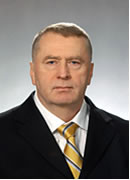

And a few people who aren't running, but who merit mention anyway:

 Vladimir Vladimirovich Putin: The President. Dominates politics. No real opposition, crushes any that could become such. Many of the accusations of authoritarianism, corruption and fixing the elections are true. He has also stabilized Russia, increased Russian power abroad and doubled incomes across the country during his tenure. He chose Medvedev as his successor, and campaigns heavily for him. He has also declared his willingness to serve as Prime Minister for as long as the country needs him after Medvedev becomes President. He's also a bit of a babe, when he wants to be. This picture came from his office's website.
